
Diabetes insipidus: 4 simple ways to balance your fluids

Have you ever felt like no matter how much water you drink, you simply cannot quench your thirst? Or perhaps you — or someone you love — has recently received a diagnosis that sounds confusingly similar to diabetes but feels completely different? Diabetes insipidus is one of those conditions that catches many people off guard, and the name alone can stir up a wave of worry and confusion.
Balance Level may earn a small commission from affiliate links included in our content, at no extra cost to you. We only recommend products and resources we genuinely believe support your health journey. Please see our full [Affiliate Disclosure Policy] and [Medical Disclaimer] for complete details.
By the end of this guide, you will understand exactly what diabetes insipidus is, how it differs from the more commonly discussed type 2 diabetes, and — most importantly — four practical, manageable ways to help balance your fluids every day.
No overwhelming medical jargon, just clear and honest information.
If you are newly diagnosed, caring for someone with this condition, or simply trying to make sense of a recent conversation with your doctor, this guide is written for you. You are not alone in feeling uncertain, and understanding your condition is the first powerful step forward.
✍️ Author & Affiliate Disclosure
This article was written by the Balance Level editorial team, which includes contributors with backgrounds in nutrition, diabetes education, and health writing. Our content is reviewed for accuracy and is intended for educational purposes only — it is not a substitute for professional medical advice.
The first thing most people want to know is this: Is this the same as regular diabetes? The short answer is no — and understanding the difference immediately takes a lot of pressure off.
Diabetes insipidus (often abbreviated as DI) is a condition that affects how your kidneys manage water in your body. It has nothing to do with blood sugar or insulin, which are the hallmarks of type 1 and type 2 diabetes. The word “diabetes” in both names simply comes from the Greek word for “siphon” — referring to excessive urination — which is why the names look similar but the conditions are entirely different.
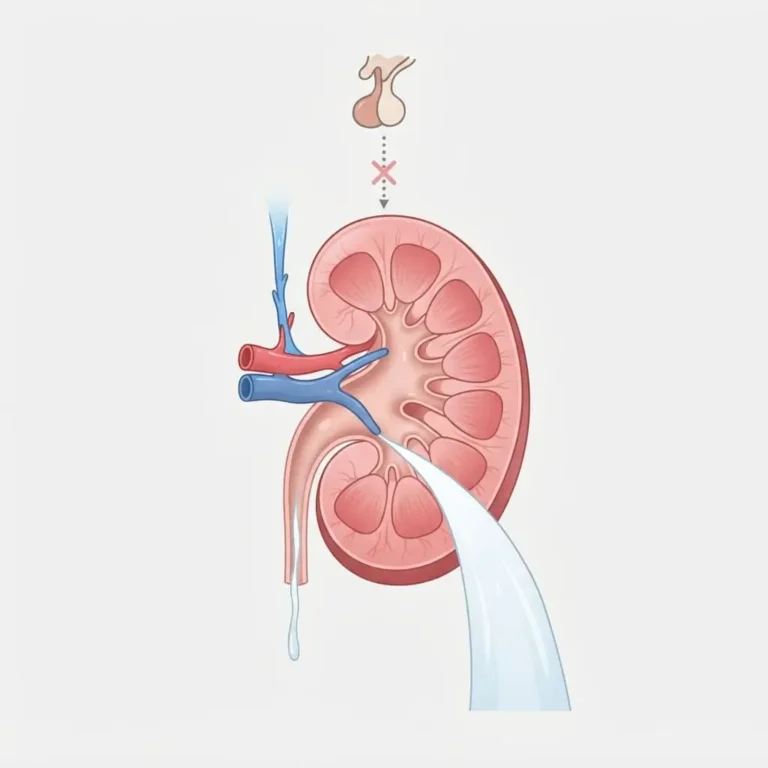
Think of your kidneys as a water filtration system in a house. Normally, a hormone called ADH (anti-diuretic hormone — the chemical messenger that tells your kidneys to hold onto water) acts like a valve, keeping just the right amount of water in your body. In diabetes insipidus, that valve is either broken or your kidneys are not responding to it properly. The result? Your body flushes out enormous amounts of very dilute urine — sometimes up to 20 liters per day [VERIFY VALUE] — leaving you intensely thirsty and potentially dehydrated.
The Two Main Types
There are two primary forms of diabetes insipidus:
- Central DI — The brain (specifically the hypothalamus or pituitary gland) does not produce enough ADH.
- Nephrogenic DI — The kidneys produce ADH is present but the kidneys do not respond to it correctly.
There are also less common forms, including dipsogenic DI (caused by excessive fluid intake damaging the thirst mechanism) and gestational DI, which can occur during pregnancy. Your doctor will help identify which type applies to your situation, as the treatment approach differs.
Understanding a few key measurements helps you and your care team track how well your fluid balance is being managed. The numbers below relate specifically to diabetes insipidus — not blood sugar targets.
| Measurement | Typical Range / Target | Notes |
| Daily urine output (normal) | 1–2 liters per day | [VERIFY VALUE] — varies by body size and fluid intake |
| Daily urine output (DI, untreated) | 3–20 liters per day | [VERIFY VALUE] — severity varies widely |
| Urine osmolality (DI) | Below 300 mOsm/kg | [VERIFY VALUE] — measures urine concentration |
| Serum sodium (normal) | 135–145 mEq/L | [VERIFY VALUE] — elevated levels signal dehydration risk |
| Blood osmolality (normal) | 275–295 mOsm/kg | [VERIFY VALUE] — tracks blood concentration |
| ADH (vasopressin) blood level | Varies by lab | Your doctor will interpret this result in context |
Important: These numbers are starting points for understanding. Your personal targets may differ. Always review your specific values with your healthcare provider.
National Institute of Diabetes and Digestihttps://www.niddk.nih.gov/health-information/kidney-disease/diabetes-insipidus/diagnosisve and Kidney Diseases clinical overview of diabetes insipidus
When your body cannot hold onto water the way it should, the effects ripple through every part of daily life — and not in a small way. Chronic dehydration caused by unmanaged diabetes insipidus can lead to fatigue, headaches, difficulty concentrating, and in more serious cases, dangerously elevated sodium levels in the blood (a condition called hypernatremia — meaning too much sodium relative to the water in your blood).
The practical impact is real. Waking up multiple times at night to urinate (a symptom called nocturia) disrupts sleep. Carrying a water bottle everywhere becomes a necessity, not a choice. Planning outings, travel, or even work meetings around bathroom access can quietly shrink your world if this condition is not well managed.
Here is the encouraging truth: fluid balance in diabetes insipidus is something you can actively influence. Understanding what your body needs — and building supportive daily habits — makes an enormous difference. It is not about being perfect; it is about being consistent.
Managing diabetes insipidus is not just about medication — daily lifestyle habits play a powerful supporting role. Here are four practical, evidence-informed strategies to help you maintain better fluid balance.
1. Match Your Fluid Intake to Your Output
Rather than guessing how much to drink, work with your care team to establish a daily fluid target based on how much you are losing. Sipping steadily throughout the day — rather than gulping large amounts at once — keeps your system more stable.

- Keep a simple log of your fluid intake and bathroom trips for a week.
- Share this log with your doctor or dietitian.
- Avoid relying on thirst alone, as the thirst signal in DI can be amplified or dysregulated.
2. Reduce Your Sodium and Protein Intake (With Guidance)
A lower-sodium diet can actually reduce the volume of urine your kidneys produce in certain types of DI — particularly nephrogenic DI. This works because sodium affects how the kidneys filter and excrete water.
- Focus on whole, minimally processed foods, which are naturally lower in sodium.
- Read food labels and aim for products with less than 600mg sodium per serving [VERIFY VALUE with a registered dietitian].
- Moderate protein intake may also help reduce urine output — discuss specific targets with your dietitian.
- Try our [Low-Sodium Meal Planning Guide for Diabetes] for practical meal ideas that support this goal.
3. Protect Yourself from Dehydration Triggers
Certain situations accelerate fluid loss and can push you into dehydration faster than usual. Being proactive — not reactive — makes these manageable.
- Heat and exercise: Increase fluid intake before, during, and after physical activity in warm conditions.
- Illness: Vomiting, diarrhea, or fever dramatically increase your fluid loss. Have a clear plan with your doctor for these situations.
- Travel: Carry adequate fluids, and identify restroom locations when visiting new places.
- Alcohol: Alcohol suppresses ADH production and can worsen DI symptoms significantly — speak with your doctor about your individual situation.
4. Take Medications as Prescribed and Track Your Response
For central DI, the most common treatment is desmopressin (DDAVP) — a synthetic version of ADH available as a nasal spray, tablet, or injection. For nephrogenic DI, treatment may include thiazide diuretics (a type of water pill that, counterintuitively, can reduce urine output in DI) or anti-inflammatory medications.
- Set a consistent schedule for medications and use reminders if needed.
- Note any changes in thirst, urination frequency, or energy levels and report them to your doctor.
- Never adjust your dose without medical guidance, as both under- and over-treatment carry risks.
Myth 1: “Diabetes Insipidus Is Just Another Type of Regular Diabetes”
Fact: Despite the shared name, diabetes insipidus has no relationship to blood sugar, insulin, or the type 1 and type 2 diabetes most people are familiar with. It is a completely separate condition involving water regulation, not glucose.
Myth 2: “Drinking More Water Will Fix the Problem”
Fact: While staying hydrated is essential, simply drinking more water does not treat the underlying cause of DI. Without addressing the hormonal or kidney issue, drinking more water primarily helps you keep pace with fluid loss — it does not stop the loss. Treatment is typically medical and should be directed by your doctor.
Myth 3: “Diabetes Insipidus Is Rare and Not That Serious”
Fact: DI is uncommon, but untreated or poorly managed DI can lead to serious complications including severe dehydration and dangerous electrolyte imbalances. Taking it seriously — even if symptoms seem manageable — protects your long-term health.
Myth 4: “Diet Has Nothing to Do With DI”
Fact: Diet — particularly sodium and protein intake — can meaningfully affect urine volume in certain types of diabetes insipidus. Nutrition is not the only tool, but it is a real and evidence-supported part of the management picture.
Diabetes insipidus requires medical oversight. Self-management strategies support your treatment, but they do not replace it. Reach out to your healthcare provider promptly if you notice any of the following:
- Extreme thirst or urination that suddenly worsens or feels out of control.
- Signs of dehydration: dizziness, dark urine, rapid heartbeat, dry mouth, or confusion.
- Signs of overhydration (which can happen with over-treatment): nausea, headache, swelling, or confusion.
- Muscle cramps, weakness, or irritability, which may signal an electrolyte imbalance (an imbalance in the minerals your body needs, like sodium and potassium).
- Fever, vomiting, or diarrhea that prevents you from keeping fluids down.
- If your urine output does not improve after starting prescribed medication within a timeframe your doctor has set [VERIFY timing with your provider].
When in doubt, call. Diabetes insipidus is manageable — but it requires a team approach.
Ready to put today’s knowledge into practice? These Balance Level guides and resources can help you take the next step:
- [Low-Sodium Meal Planning for Diabetes and Kidney Health] — A practical guide to reducing sodium in your everyday meals without sacrificing flavor.
- [Hydration and Diabetes: How Much Water Should You Really Drink?] — A deeper look at how hydration needs change when you are managing a chronic condition.
- [Understanding Your Lab Results: A Plain-Language Guide for Newly Diagnosed Patients] — Decode the numbers your doctor is tracking and what they mean for your health.
Diabetes insipidus is a condition that can feel overwhelming at first — especially when the name sounds so familiar yet the experience is so different from what most people expect. But here is what matters most: it is understandable, it is manageable, and you do not have to figure it out alone.
By matching your fluid intake to your output, reducing sodium in your diet, protecting yourself from dehydration triggers, and taking your medications consistently, you give yourself four real, practical tools to work with every single day. Small, steady steps — taken consistently — add up to meaningful change over time.
Did this guide help? Leave a comment below with your biggest question — I read every one. And if you want more clear, no-jargon diabetes guides delivered straight to your inbox, subscribe to the Balance Level newsletter today.
Q: Is diabetes insipidus the same as type 2 diabetes?
A: No. Despite the similar name, diabetes insipidus has nothing to do with blood sugar or insulin. It is a separate condition caused by problems with water regulation in the body. Type 2 diabetes involves insulin resistance and blood glucose management.
Q: Can what I eat really affect diabetes insipidus symptoms?
A: Yes — particularly for nephrogenic DI. A lower-sodium, moderate-protein diet can help reduce urine volume. For practical guidance on building meals that support this, explore our [Low-Sodium Meal Planning Guide] on Balance Level.
Q: How do I know if I am drinking enough fluids?
A: A simple starting point is to check your urine color — pale yellow typically indicates good hydration, while dark yellow or amber suggests you need more fluids. However, in DI, your urine may consistently appear very pale regardless. Work with your doctor to establish a personalized fluid target.
Q: Can diabetes insipidus go away on its own?
A: In some cases — such as gestational DI — the condition resolves after the triggering factor is gone. In other cases, it is a long-term condition requiring ongoing management. Your doctor will advise you based on your specific type and cause.
Q: What foods should I avoid if I have diabetes insipidus?
A: High-sodium processed foods, alcohol, and excessive protein may worsen symptoms in certain types of DI. Focus on whole foods, vegetables, and lean proteins. For meal ideas that align with a lower-sodium approach, browse our [Diabetes-Friendly Recipe Collection] on Balance Level.
Q: What is the difference between central and nephrogenic diabetes insipidus?
A: Central DI means the brain is not producing enough ADH (the hormone that tells kidneys to hold water). Nephrogenic DI means the kidneys are not responding to ADH properly. The distinction matters because the treatments are different.
Q: Can children have diabetes insipidus?
A: Yes. DI can affect people of any age, including infants and children. Signs in young children may include unusual irritability, preference for cold water, poor weight gain, or frequent wet diapers beyond what is typical. A pediatrician should evaluate these symptoms.
Q: When should I go to the emergency room?
A: Seek emergency care if you or your child experience signs of severe dehydration — including rapid heartbeat, extreme confusion, sunken eyes, inability to urinate, or loss of consciousness. These are medical emergencies that require immediate attention.
Disclaimer: The content on Balance Level is intended for educational and informational purposes only. It is not a substitute for professional medical advice, diagnosis, or treatment. Always consult your physician or qualified health provider with any questions you may have regarding a medical condition. Never disregard professional medical advice or delay seeking it because of something you have read on this website.