Gluten Free Lasagna Recipe: How to Make in 30 Minutes
If you’ve been craving a warm, comforting bowl of lasagna but feel stuck because of a gluten sensitivity or a need to manage your blood sugar, you’re not alone.
Finding a gluten free lasagna recipe that actually tastes satisfying — without spiking your glucose levels — can feel like an impossible task. The good news? It doesn’t have to be. This recipe was built specifically for people who want real comfort food without the post-meal crash.
In this post, you’ll get a complete, step-by-step gluten free lasagna recipe that comes together in about 30 minutes, uses easy-to-find ingredients, and is thoughtfully designed to keep carbs moderate and nutrients high.
Whether you’re managing Type 2 Diabetes or navigating Gestational Diabetes during pregnancy, this recipe gives you a satisfying dinner option you can feel genuinely good about eating.
📋 Author & Affiliate Disclosure
Written by a certified recipe developer with a focus on blood-sugar-friendly cooking. This post may contain affiliate links, which means I may earn a small commission if you purchase through my links — at no extra cost to you. I only recommend products I personally use and trust. This content is for informational purposes only and is not a substitute for personalized medical or nutritional advice. Always consult your healthcare provider or registered dietitian before making dietary changes, especially if you are pregnant or managing a chronic condition like Type 2 Diabetes.
Equipment Needed
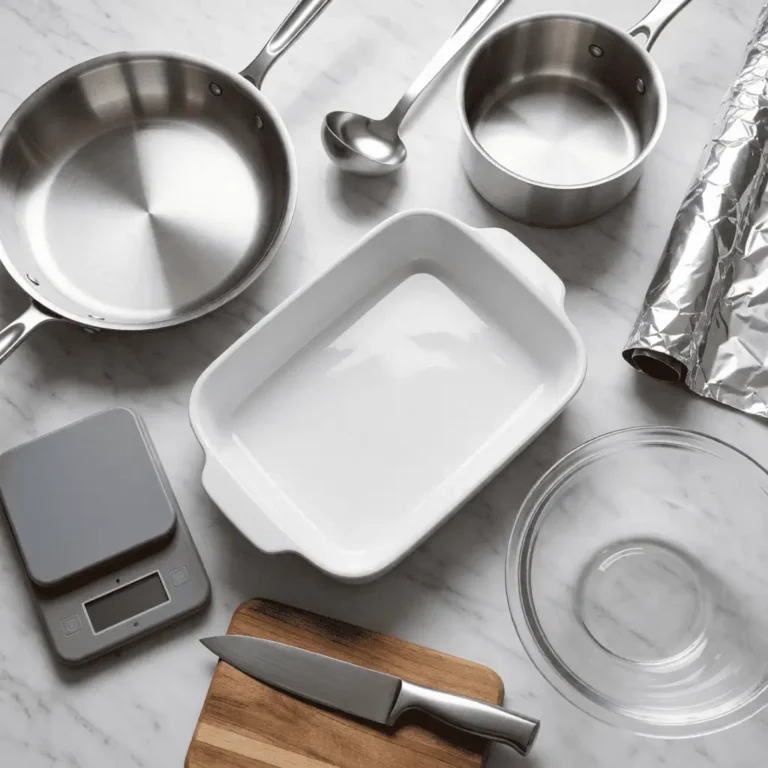
Having the right tools makes this gluten free lasagna come together smoothly — and a few of them genuinely matter for managing portion sizes and blood sugar impact.
- 9×13 inch baking dish — standard size for layering and even cooking
- Large skillet or sauté pan — for browning the meat filling
- Medium saucepan — for warming the sauce
- Food scale (recommended) — precise portioning is one of the most effective tools for blood sugar management; a food scale removes the guesswork
- Mixing bowl — for combining the cheese filling
- Sharp knife and cutting board — for prepping vegetables
- Aluminum foil — for covering the dish during the first bake phase
- Ladle or large spoon — for spreading sauce evenly between layers
Ingredients List
This recipe serves 6 people. Carb estimates are approximate — verify with your tracking app.
For the Meat Filling:
- 1 lb (450g) lean ground beef or ground turkey
- 1 medium yellow onion, finely diced
- 3 garlic cloves, minced
- 1 tsp olive oil
- 1 tsp Italian seasoning
- ½ tsp salt and black pepper to taste
For the Sauce:
- 2 cups (480ml) low-sugar marinara sauce (~12g carbs per ½ cup — choose brands with no added sugar)
- ½ tsp dried basil
- ½ tsp dried oregano
For the Cheese Layer:
- 1½ cups (375g) ricotta cheese (full-fat preferred for satiety)
- 1½ cups (170g) shredded mozzarella cheese, divided
- ¼ cup (25g) grated Parmesan cheese
- 1 large egg
- ¼ tsp nutmeg (optional)
For the Noodle Layer:
- 9–12 gluten free lasagna noodles (~20–24g carbs per 2 noodles — look for brown rice or chickpea-based varieties)
- OR 2 large zucchini, sliced lengthwise into thin strips as a low-carb noodle alternative (~3g carbs per serving)
Substitution Notes:
- 🔁 Lower-carb swap: Replace gluten free noodles entirely with zucchini strips or thinly sliced eggplant — reduces net carbs significantly
- 🔁 Dairy-free swap: Use cashew ricotta and dairy-free mozzarella; expect a slightly less creamy texture
- 🔁 Budget swap: Replace ground beef with canned lentils — note this will increase carb content (~8g per ½ cup cooked lentils)
- 🔁 Vegan swap: Use lentils or crumbled firm tofu in place of meat, plus plant-based cheeses
⚠️ Carb estimates are approximate — verify with your tracking app.
Timing
| Phase | Time |
| Prep Time | 10 minutes |
| Cook Time | 20 minutes |
| Total Time | 30 minutes |
| Servings | 6 |
Step-by-Step Instructions
Phase 1: Prepare Your Filling and Sauce
- Heat the skillet over medium heat and add 1 tsp olive oil. Once warm, add the diced onion and cook for 2–3 minutes until softened. Blood sugar tip: Building flavor with vegetables adds fiber and volume to the filling, which helps slow digestion.
- Add garlic and ground meat. Break the meat apart with a wooden spoon and cook until fully browned, about 5–6 minutes. Drain excess fat if needed. Season with Italian seasoning, salt, and pepper.
- Stir in the marinara sauce and let it simmer on low for 3–4 minutes. Choose a no-added-sugar marinara to keep this lasagna as blood-sugar-friendly as possible.
Phase 2: Prepare the Cheese Mixture and Noodles
- In your mixing bowl, combine ricotta, half of the mozzarella (¾ cup), Parmesan, egg, and nutmeg. Stir until smooth. The egg acts as a binder and adds protein, helping balance the carb load in each layer.
- Cook your gluten free noodles according to package directions — but pull them out 1–2 minutes before they’re fully soft. Al dente noodles have a slightly lower glycemic response than fully cooked ones, which can help moderate glucose absorption.
- If using zucchini strips: No cooking needed. Pat them dry with paper towels to prevent a watery lasagna.
Phase 3: Assemble and Bake
- Preheat your oven to 375°F (190°C). Lightly grease your baking dish.
- Spread a thin layer of meat sauce on the bottom of the dish — this prevents sticking and adds flavor to the base.
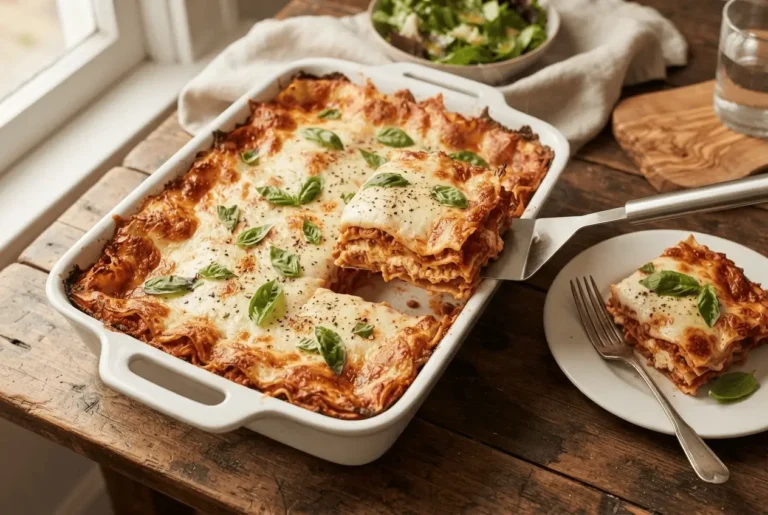
- Layer in this order: noodles (or zucchini), cheese mixture, meat sauce. Repeat until you’ve used all your ingredients, finishing with a layer of sauce on top.
- Sprinkle the remaining mozzarella evenly over the top.
- Cover with foil and bake for 15 minutes. Remove foil and bake an additional 5 minutes until the cheese is golden and bubbly. Letting the lasagna rest for 5 minutes before cutting helps the layers set, making portioning easier and more accurate.
Blood Sugar Impact Summary
This gluten free lasagna recipe keeps net carbs moderate by pairing the noodle layer with generous protein from meat and cheese, plus fiber from the vegetables in the sauce — a combination that helps blunt post-meal glucose spikes. If you use zucchini noodles instead of rice-based pasta, you significantly reduce the glycemic load per serving. Portion size matters: even a well-balanced recipe can raise blood sugar if you eat two or three large servings, so use the food scale and stick to one clearly measured portion.
Nutritional Information
Per serving (1/6 of the full recipe, using gluten free pasta noodles):
| Nutrient | Amount (Approx.) |
| Calories | ~380 kcal |
| Total Carbohydrates | ~28g |
| Fiber | ~3g |
| Net Carbs | ~25g |
| Protein | ~30g |
| Total Fat | ~16g |
Per serving using zucchini noodles instead:
| Nutrient | Amount (Approx.) |
| Calories | ~290 kcal |
| Total Carbohydrates | ~10g |
| Fiber | ~2g |
| Net Carbs | ~8g |
| Protein | ~29g |
| Total Fat | ~16g |
📌 Nutritional estimates are approximate based on standard USDA values. Always verify with your own tracking app or consult your dietitian — especially if you are managing gestational diabetes or adjusting insulin.
Healthier Alternatives
| Swap | Effect on Taste | Effect on Blood Sugar |
| Zucchini noodles instead of GF pasta | Lighter, more moisture — pat dry well | Significantly lowers net carbs and glycemic load |
| Eggplant slices as noodles | Slightly earthier, holds up well | Low carb, adds fiber |
| Ground turkey instead of beef | Leaner, slightly milder flavor | Maintains protein without extra saturated fat |
| Cottage cheese instead of ricotta | Slightly more texture, less creamy | Similar carb profile; higher protein |
| Dairy-free cheese alternatives | Less melt, less richness | Minimal carb difference; check labels for fillers |
| No-sugar-added tomato sauce | Same flavor with less sweetness | Noticeably reduces carb count per serving |
Serving Suggestions
- Keep it balanced: Serve one portion of lasagna alongside a large green salad dressed with olive oil and lemon — the fiber and fat help slow glucose absorption without adding meaningful carbs.
- Add a non-starchy vegetable side: Steamed broccoli, roasted asparagus, or sautéed spinach pair naturally with Italian flavors and add volume to your plate.
- Garnish thoughtfully: A sprinkle of fresh basil or flat-leaf parsley adds brightness. A drizzle of high-quality olive oil adds healthy fat that supports satiety.
- Portion it on a smaller plate: Visual cues matter. A proper portion on a smaller plate looks and feels more satisfying than a small serving on a large plate.
Common Mistakes to Avoid
- Overcooking the gluten free noodles before baking. GF noodles become mushy quickly. Pull them slightly underdone — they’ll finish cooking in the oven and hold their structure better.
- Using a marinara sauce with added sugar. Many jarred sauces contain 6–10g of added sugar per serving. Read the label. This single swap can meaningfully change the carb total per serving.
- Skipping the resting time after baking. Cutting into the lasagna immediately causes layers to slide apart, making accurate portioning nearly impossible — and inconsistent portions make blood sugar management harder.
- Not accounting for the noodle type in your carb tracking. Gluten free pasta can vary widely between brands — chickpea-based noodles have different carb profiles than brown rice noodles. Always check your specific product’s nutrition label.
Storing Tips
- Refrigerator: Store cooled leftovers in an airtight container for up to 4 days. Slice into individual portions before storing to make reheating and tracking easier.
- Freezer: This lasagna freezes well for up to 2 months. Wrap individual slices in plastic wrap, then place in a freezer-safe bag.
- Reheating: Reheat in the oven at 350°F (175°C) covered with foil for 15–20 minutes to preserve texture. Microwave reheating works in a pinch — cover with a damp paper towel and heat in 90-second intervals to avoid drying out the cheese.
- Food safety note: Never leave cooked lasagna at room temperature for more than 2 hours.
Conclusion
This gluten free lasagna recipe proves that comfort food and blood sugar management don’t have to be opposites. With lean protein, a low-sugar sauce, moderate-carb gluten free noodles (or virtually zero-carb zucchini strips), and a rich cheese filling, this dish delivers real satisfaction without derailing your glucose goals. It comes together in 30 minutes, stores beautifully, and scales easily for meal prep. Whether you’re eating for Type 2 Diabetes or managing Gestational Diabetes, this is a recipe worth keeping in your regular rotation.
Try this recipe and let me know how it turned out in the comments below. Don’t forget to subscribe for more blood-sugar-friendly recipes delivered straight to your inbox.
📥 Download the printable grocery list for this recipe here.
FAQs
1. Can I eat this gluten free lasagna if I have gestational diabetes?
Yes, this recipe can absolutely fit into a gestational diabetes meal plan, especially if you use zucchini noodles to lower the carb content. Always discuss specific carb targets with your OB or registered dietitian, as GD carb needs vary person to person.
2. How many carbs are in one serving of this gluten free lasagna?
With gluten free pasta noodles, one serving contains approximately 25g of net carbs. With zucchini noodles, that drops to approximately 8g of net carbs per serving. These are estimates — verify with your tracking app using your specific ingredients.
3. Is gluten free pasta better for blood sugar than regular pasta?
Not necessarily. Many gluten free noodles are made from rice flour or corn, which can have a similar or slightly higher glycemic index than traditional wheat pasta. The bigger benefit here comes from the protein and fat in the filling, which slows glucose absorption overall.
4. Can I make this lasagna ahead of time?
Yes. Assemble the full lasagna, cover tightly with foil, and refrigerate for up to 24 hours before baking. Add 5–10 extra minutes to the bake time when cooking from cold.
5. What’s the best gluten free lasagna noodle brand to use?
Several brands work well, including Barilla GF, Jovial, and Tinkyada. Chickpea-based noodles (like Banza) add extra protein and fiber, which may have a gentler effect on blood sugar. Check individual carb values as they differ.
6. Can I use cottage cheese instead of ricotta?
Yes. Full-fat cottage cheese is a great ricotta substitute with a slightly higher protein content and similar carb profile. Blend it first for a smoother texture in the cheese layer.
7. Is this recipe safe if I’m on insulin?
This recipe is designed to keep carbs moderate, but it is not medical advice. If you’re on insulin, count your carbs carefully using your tracking app, and discuss meal planning with your endocrinologist or diabetes educator.
8. Can I make this dairy-free and gluten free at the same time?
Yes. Use dairy-free ricotta (cashew-based works well), dairy-free mozzarella, and zucchini noodles. Be aware that dairy-free cheeses may not melt as smoothly, so expect a slightly different texture — but the flavor is still very satisfying.
Gluten Free Lasagna Recipe: How to Make in 30 Minutes
Ingredients
Equipment
Method
- Heat the skillet over medium heat and add 1 tsp olive oil. Once warm, add the diced onion and cook for 2–3 minutes until softened.Add garlic and ground meat. Break the meat apart with a wooden spoon and cook until fully browned, about 5–6 minutes. Drain excess fat if needed. Season with Italian seasoning, salt, and pepper.Stir in the marinara sauce and let it simmer on low for 3–4 minutes. Choose a no-added-sugar marinara for better blood sugar control.
- In your mixing bowl, combine ricotta, half of the mozzarella (¾ cup), Parmesan, egg, and nutmeg. Stir until smooth.Cook your gluten free noodles according to package directions — but pull them out 1–2 minutes before they're fully soft.
- Preheat your oven to 375°F (190°C). Lightly grease your baking dish.Spread a thin layer of meat sauce on the bottom of the dish to prevent sticking.Layer in this order: noodles (or zucchini), cheese mixture, meat sauce. Repeat until you've used all ingredients, finishing with a layer of sauce on top.Sprinkle the remaining mozzarella evenly over the top.Cover with foil and bake for 15 minutes. Remove foil and bake an additional 5 minutes until golden and bubbly. Let the lasagna rest for 5 minutes before cutting.
Notes
⚕️ Disclaimer: The content on this website is for informational and educational purposes only. It is not intended to replace personalized medical advice, diagnosis, or treatment from a qualified healthcare professional. If you are pregnant, diabetic, or managing any chronic health condition, always consult your doctor or registered dietitian before making changes to your diet.