Diabetes Meal Plans: How to Build 5 Balanced Plates

If you have ever stood in your kitchen after a diabetes diagnosis and thought, “What on earth am I supposed to eat today?” — you are not alone. The overwhelm is real, and it is one of the most common struggles for people managing Type 2 Diabetes or Gestational Diabetes.
Conflicting advice, confusing food labels, and fear of blood sugar spikes can make even a simple meal feel like a minefield.
That is exactly why structured diabetes meal plans exist.
This guide walks you through how to build 5 balanced, blood sugar–friendly plates across a single day — covering breakfast, lunch, dinner, and two snacks. Every meal is designed around a simple principle: pair protein with fiber, keep carbs moderate, and eat in a way that feels sustainable — not punishing.
This plan is designed for two groups: adults managing Type 2 Diabetes who want a practical daily eating structure, and women navigating Gestational Diabetes who need safe, nourishing meals that support both their blood sugar and their pregnancy. Portions are realistic, ingredients are accessible, and nothing here requires a nutrition degree to understand.
What This Plan Covers
This guide focuses on one structured day of eating built around 5 balanced plates: breakfast, a mid-morning snack, lunch, an afternoon snack, and dinner. Each plate is designed to keep carbohydrates moderate and consistent, pair protein with fiber, and avoid large glucose spikes. The goal is not perfection — it is a repeatable, calm approach to daily eating.
Key principles behind every plate:
- Each meal includes a quality protein source, a fiber-rich vegetable or grain, and a healthy fat
- Carbohydrates are distributed evenly across the day rather than loaded into one meal
- Total daily carbohydrate range: approximately 130–160g per day [VERIFY VALUE with your tracking app or dietitian — individual targets vary]
- Plate portions are designed for an average adult — please adjust based on your doctor’s or dietitian’s specific guidance
For women with Gestational Diabetes, carbohydrate needs during pregnancy may be slightly higher to support fetal development. Always confirm your personal targets with your obstetric team.
If you want a deeper understanding of how blood sugar targets work, read our guide on understanding blood sugar levels for Type 2 Diabetes and GDM.
The 5 Balanced Plates: Day Breakdown
Plate 1 — Breakfast
Spinach & Egg Scramble with Whole Grain Toast

Two large eggs scrambled with a generous handful of fresh spinach, cooked in a small amount of olive oil, served alongside one slice of whole grain toast with half an avocado spread on top. This is a warm, filling, blood sugar–friendly way to start the day.
| Nutrient | Approximate Amount |
| Carbohydrates | ~25–30g [VERIFY VALUE] |
| Protein | ~18–20g [VERIFY VALUE] |
| Fat | ~16–18g [VERIFY VALUE] |
| Fiber | ~6g [VERIFY VALUE] |
🩸 Blood Sugar Tip: Eat the eggs and spinach first before the toast. Starting with protein and vegetables before carbohydrates may help slow glucose absorption and reduce post-meal spikes.
Plate 2 — Mid-Morning Snack

Option A: Plain Greek Yogurt + Berries
One small container (approx. 150g) of plain, full-fat Greek yogurt topped with a small handful of fresh blueberries. Low in sugar, high in protein, and satisfying without a carb overload.
Option B: Celery Sticks + Almond Butter
Four to five celery stalks with one tablespoon of natural almond butter. Virtually zero net carbs from the celery, with healthy fat and protein from the almond butter.
| Snack | Approx. Carbs | Approx. Protein |
| Greek Yogurt + Berries | ~15g [VERIFY VALUE] | ~12g [VERIFY VALUE] |
| Celery + Almond Butter | ~5g [VERIFY VALUE] | ~4g [VERIFY VALUE] |
🩸 Blood Sugar Tip: A mid-morning snack is especially important if you take insulin or medication that can cause blood sugar dips between meals. Keep the portion small and protein-forward.
Plate 3 — Lunch
Grilled Chicken & Roasted Vegetable Bowl with Quinoa

A generous portion of grilled chicken breast (approximately 120–150g cooked) served over half a cup of cooked quinoa, with a large side of roasted non-starchy vegetables — think zucchini, bell peppers, and cherry tomatoes — drizzled with olive oil and a squeeze of lemon.
| Nutrient | Approximate Amount |
| Carbohydrates | ~35–40g [VERIFY VALUE] |
| Protein | ~35–38g [VERIFY VALUE] |
| Fat | ~12–14g [VERIFY VALUE] |
| Fiber | ~7–8g [VERIFY VALUE] |
🩸 Blood Sugar Tip: Quinoa has a lower glycemic index than white rice, meaning it tends to raise blood sugar more gradually. If quinoa is not available, half a cup of cooked brown rice or lentils are good swaps.
For more diabetic-friendly lunch ideas like this one, explore our easy low-carb meal ideas for Type 2 Diabetes.
Plate 4 — Afternoon Snack
Option A: Small Handful of Mixed Nuts
Approximately 20–25g of unsalted mixed nuts (almonds, walnuts, cashews). High in healthy fat, moderate protein, very low in carbohydrates.
Option B: Cucumber Slices + Hummus
Half a cucumber sliced, served with two tablespoons of plain hummus. Crunchy, fresh, and satisfying.
| Snack | Approx. Carbs | Approx. Protein |
| Mixed Nuts | ~5–6g [VERIFY VALUE] | ~5g [VERIFY VALUE] |
| Cucumber + Hummus | ~8–10g [VERIFY VALUE] | ~3–4g [VERIFY VALUE] |
🩸 Blood Sugar Tip: An afternoon snack helps bridge the gap between lunch and dinner so that blood sugar does not drop too low before your evening meal. This is particularly important for women with Gestational Diabetes who may experience faster blood sugar fluctuations.
Plate 5 — Dinner
Baked Salmon with Steamed Broccoli & Sweet Potato

One portion of baked salmon fillet (approximately 140–160g), seasoned simply with olive oil, garlic, and herbs. Served alongside a generous portion of steamed broccoli and half a medium baked sweet potato.
| Nutrient | Approximate Amount |
| Carbohydrates | ~30–35g [VERIFY VALUE] |
| Protein | ~38–42g [VERIFY VALUE] |
| Fat | ~18–20g [VERIFY VALUE] |
| Fiber | ~8–9g [VERIFY VALUE] |
🩸 Blood Sugar Tip: Eating a lighter carbohydrate load at dinner may support better overnight blood sugar stability. Sweet potato is a nutritious carbohydrate choice — just keep the portion to half a medium one to stay within range.
Daily Carb Summary (Approximate):
Total estimated carbohydrates across all 5 plates: ~118–141g [VERIFY VALUE — use a food tracking app such as MyFitnessPal or Cronometer to confirm based on your exact portions and ingredients].
Weekly Grocery List

Use this list to shop for ingredients that support your diabetic-friendly meal plan across the week. Items are organized by store section for easy shopping.
🥦 Produce
| Item | Tag | Note |
| Fresh spinach | [T2D-Friendly] [GD-Safe] | Use generously in breakfast scrambles |
| Avocados | [T2D-Friendly] [GD-Safe] | Healthy fat source — 1/4 to 1/2 per serving |
| Blueberries | [T2D-Friendly] [GD-Safe] | Small portions — approx. 1/3 cup per serving |
| Zucchini | [T2D-Friendly] [GD-Safe] [Budget Option] | Roast or steam |
| Bell peppers (mixed) | [T2D-Friendly] [GD-Safe] [Budget Option] | Non-starchy, high fiber |
| Cherry tomatoes | [T2D-Friendly] [GD-Safe] | Small portions |
| Broccoli | [T2D-Friendly] [GD-Safe] [Budget Option] | Steam or roast |
| Sweet potato | [T2D-Friendly] [GD-Safe] | Portion carefully: 1/2 medium per serving |
| Celery | [T2D-Friendly] [GD-Safe] [Budget Option] | Snack staple |
| Cucumber | [T2D-Friendly] [GD-Safe] [Budget Option] | Snack staple |
| Lemon | [T2D-Friendly] [GD-Safe] | Flavoring — no carb concern |
🥛 Dairy & Eggs
| Item | Tag | Note |
| Large eggs | [T2D-Friendly] [GD-Safe] | 2 per breakfast serving |
| Plain full-fat Greek yogurt | [T2D-Friendly] [GD-Safe] | Check label — no added sugar |
🍗 Protein
| Item | Tag | Note |
| Chicken breast | [T2D-Friendly] [GD-Safe] [Budget Option] | ~120–150g cooked per serving |
| Salmon fillets | [T2D-Friendly] [GD-Safe] | Rich in omega-3 |
| Canned salmon or tuna | [T2D-Friendly] [GD-Safe] [Budget Option] | Budget swap for fresh fish |
🫙 Pantry / Dry Goods
| Item | Tag | Note |
| Whole grain bread | [T2D-Friendly] [GD-Safe] | 1 slice per serving |
| Quinoa | [T2D-Friendly] [GD-Safe] | 1/2 cup cooked per serving |
| Almond butter (natural) | [T2D-Friendly] [GD-Safe] | 1 tablespoon per serving |
| Mixed unsalted nuts | [T2D-Friendly] [GD-Safe] | ~20–25g per serving |
| Plain hummus | [T2D-Friendly] [GD-Safe] | 2 tablespoons per serving |
| Olive oil | [T2D-Friendly] [GD-Safe] | Use in moderation |
| Dried herbs & garlic | [T2D-Friendly] [GD-Safe] | Seasoning — no carb concern |
❄️ Frozen
| Item | Tag | Note |
| Frozen broccoli | [T2D-Friendly] [GD-Safe] [Budget Option] | Equally nutritious as fresh |
| Frozen mixed vegetables | [T2D-Friendly] [GD-Safe] [Budget Option] | Check for no added sauces |
| Frozen salmon portions | [T2D-Friendly] [GD-Safe] [Budget Option] | Thaw overnight in fridge |
Meal Prep Schedule

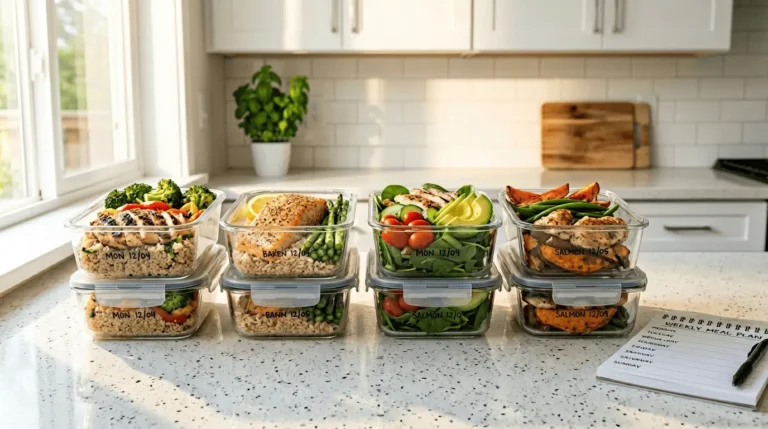
A little Sunday prep goes a long way toward keeping your healthy diabetic diet plan on track all week. Here is a simple time-blocked prep guide.
Sunday Prep Session — Estimated Time: 60–75 minutes
| Time Block | Task |
| 0:00 – 0:15 | Cook quinoa (makes 3–4 servings); store in airtight container |
| 0:15 – 0:30 | Roast a large tray of mixed vegetables (zucchini, peppers, tomatoes) |
| 0:30 – 0:45 | Bake or grill chicken breast portions; slice and store |
| 0:45 – 0:55 | Hard-boil 4–6 eggs for quick protein additions to snacks or salads |
| 0:55 – 1:05 | Wash and portion snack items: celery sticks, cucumber slices, nuts into small containers |
| 1:05 – 1:15 | Portion Greek yogurt into individual containers; keep berries separate until serving |
Storage Containers: Use glass meal prep containers with airtight lids for cooked proteins and grains. Small silicone snack bags or BPA-free containers work well for nuts and vegetable snacks.
Reheating Instructions:
- Chicken & Quinoa Bowl: Reheat in microwave for 2–3 minutes, add a splash of water or broth to keep moist, or warm in a pan over medium heat
- Roasted Vegetables: Best reheated in a dry pan or oven at 180°C (350°F) for 5–8 minutes to restore texture; microwave is fine if time is short
- Salmon: Reheat gently in oven at 160°C (320°F) for 10 minutes, or enjoy at room temperature over salad
- Do not reheat Greek yogurt — serve cold directly from the fridge
Blood Sugar Tips for the Week

These general, evidence-informed tips apply across the entire day and support a stable blood sugar pattern.
💡 Tip 1 — Eat in the Right Order
At each meal, eat your protein and vegetables first, then your carbohydrates last. This simple habit may help reduce the speed at which glucose enters your bloodstream after eating.
💡Tip 2 — Keep Carbohydrate Portions Consistent</strong>
Rather than having a very low-carb breakfast and a high-carb dinner, aim to spread your carbohydrates evenly across all meals and snacks. Consistency helps your body — and any medication you take — work more effectively.
💡 Tip 3 — Move After Meals
Even a 10–15 minute gentle walk after a meal can support healthy blood sugar responses. This does not need to be intense exercise — movement of any kind is beneficial.
Healthier Swaps & Modifications
This plan is designed to be flexible. Here is how to adapt it to your specific needs.
To Lower Carbs Further (for stricter T2D management):
- Replace the whole grain toast at breakfast with an extra serving of vegetables or an additional egg
- Swap quinoa for cauliflower rice (virtually zero carbs)
- Skip the sweet potato at dinner and double the broccoli instead
Budget Swaps:
- Canned salmon or tuna instead of fresh salmon fillets
- Frozen vegetables instead of fresh — equally nutritious and significantly cheaper
- Eggs instead of chicken breast for a more affordable protein source
Vegetarian / Vegan Alternatives:
- Replace chicken with firm tofu, tempeh, or a large serving of lentils
- Replace salmon with a serving of edamame or black beans paired with avocado
- Use plant-based yogurt (unsweetened coconut or soy-based) in place of Greek yogurt — check labels carefully for added sugars
Pregnancy-Specific Modifications (Gestational Diabetes):
- Do not restrict calories during pregnancy without direct medical guidance — this plan supports adequate nutrition, but your total intake needs should be confirmed with your obstetric team
- If morning sickness affects breakfast, try the Greek yogurt and berries option as a gentler start
- Folate-rich foods like spinach and broccoli are particularly valuable during pregnancy and are already included in this plan
- For more guidance, visit our complete gestational diabetes meal planning guide
Storage & Reheating
<a id=”storage”></a>
Knowing how to store and reheat your meals safely is just as important as preparing them well.
| Meal Type | Fridge Storage | Freezer Storage |
| Cooked chicken | Up to 4 days | Up to 3 months |
| Cooked salmon | Up to 2 days | Up to 2 months |
| Cooked quinoa | Up to 5 days | Up to 2 months |
| Roasted vegetables | Up to 4 days | Up to 3 months |
| Hard-boiled eggs | Up to 1 week (in shell) | Not recommended |
| Greek yogurt portions | Up to 5 days (pre-portioned) | Not recommended |
Best Reheating Methods:
- Proteins (chicken, salmon): Oven or stovetop preferred to maintain texture; microwave on medium power to avoid drying out
- Grains (quinoa): Microwave with a tablespoon of water, covered, for 1–2 minutes
- Vegetables: Dry pan or oven for best texture; microwave is acceptable
⚠️ <strong>Food Safety Note for Pregnant Women:</strong> Always reheat all pre-cooked proteins to an internal temperature of <strong>165°F (74°C)</strong> before eating. This is especially important during pregnancy to reduce any risk of foodborne illness. Use a food thermometer if you are unsure.
Conclusion
Building balanced diabetes meal plans does not need to be complicated or overwhelming. As you have seen in this guide, it comes down to 5 structured plates built around protein, fiber, and moderate, evenly distributed carbohydrates. Whether you are managing Type 2 Diabetes or navigating Gestational Diabetes, this approach gives you a clear, calm framework to eat well every day — without restriction, confusion, or guesswork.
Start with just one day using this structure, see how your body responds, and build from there. Small, consistent changes are far more powerful than perfection.
Try this plan and share your experience in the comments below. We would love to hear which plate became your favorite. Subscribe to Balance Level for weekly meal plans, blood sugar–friendly recipes, and practical nutrition guides delivered straight to your inbox.
📥 Download this meal plan as a printable PDF + grocery list — click here to get your free copy and save it for the week ahead.
FAQs
1. Can I repeat the same meals if I find ones I enjoy?
Absolutely. Repeating meals you like is actually one of the best strategies for consistent blood sugar management. Familiarity with a meal means you know exactly what is in it and how your body responds to it. There is no nutritional rule that says you need to eat something different every single day.
2. What if my blood sugar spikes after one of these meals?
Individual responses to food vary significantly. If you notice a spike after a particular meal, take note of the portion size, the order you ate the food, and whether you were sitting or active afterward. Try reducing the carbohydrate portion slightly, eating protein first, or going for a short walk after eating. If spikes are consistent, discuss them with your healthcare provider — your medication or targets may need reviewing.
3. Is this meal plan suitable for women with Gestational Diabetes?
Yes, this plan was designed with both Type 2 Diabetes and Gestational Diabetes in mind. Each meal pairs protein with fiber and keeps carbohydrates moderate and consistent — which aligns with general GDM dietary principles. However, always confirm your personal carbohydrate targets and calorie needs with your obstetric team or a registered dietitian who specializes in pregnancy nutrition.
4. Is it safe to meal prep while pregnant?
Yes, meal prepping during pregnancy is generally safe and highly practical. The key is to follow standard food safety practices: wash hands thoroughly, cook proteins to safe internal temperatures (165°F / 74°C), refrigerate prepped food promptly, and consume within recommended storage timeframes. Avoid leaving cooked food at room temperature for more than two hours.
5. Can I follow this plan if I am on insulin or diabetes medication?
This plan provides general nutrition guidance and is not designed to replace medical management. If you take insulin or glucose-lowering medication, your carbohydrate intake may need to be adjusted in coordination with your healthcare provider. Always discuss any dietary changes with your doctor or diabetes care team before starting.
6. How do I know if my daily carb target is right for me?
Carbohydrate needs are highly individual and depend on your weight, activity level, medication, blood sugar targets, and whether you are pregnant. The approximate targets in this plan are a starting point only. Work with a registered dietitian or diabetes educator to establish your personalized daily carbohydrate range.
7. What is the best low-carb swap for sweet potato at dinner?
Great options include steamed broccoli, roasted cauliflower, baked zucchini, or a simple green salad. All of these are very low in carbohydrates and pair beautifully with salmon or chicken. If you want something warmer and more filling, a small serving of lentils (approximately 1/3 cup cooked) is a fiber-rich alternative with a moderate carbohydrate load.
8. Do I need to count calories on this plan?
This plan does not require calorie counting. The focus is on food quality, macronutrient balance, and consistent eating patterns — not strict calorie restriction. That said, if weight management is also a goal alongside blood sugar control, a registered dietitian can help you find the right calorie range for your individual needs.
<div style=”background-color:#F4ECE6; border-radius:8px; padding:16px; margin-top:32px; font-size:0.9em;”>
<strong>Medical Disclaimer:</strong> The content on Balance Level is intended for general informational purposes only. It is not a substitute for professional medical advice, diagnosis, or treatment. Always seek the guidance of your physician, registered dietitian, or qualified health provider with any questions you may have regarding a medical condition or dietary change. Never disregard professional medical advice or delay seeking it because of something you have read on this website.